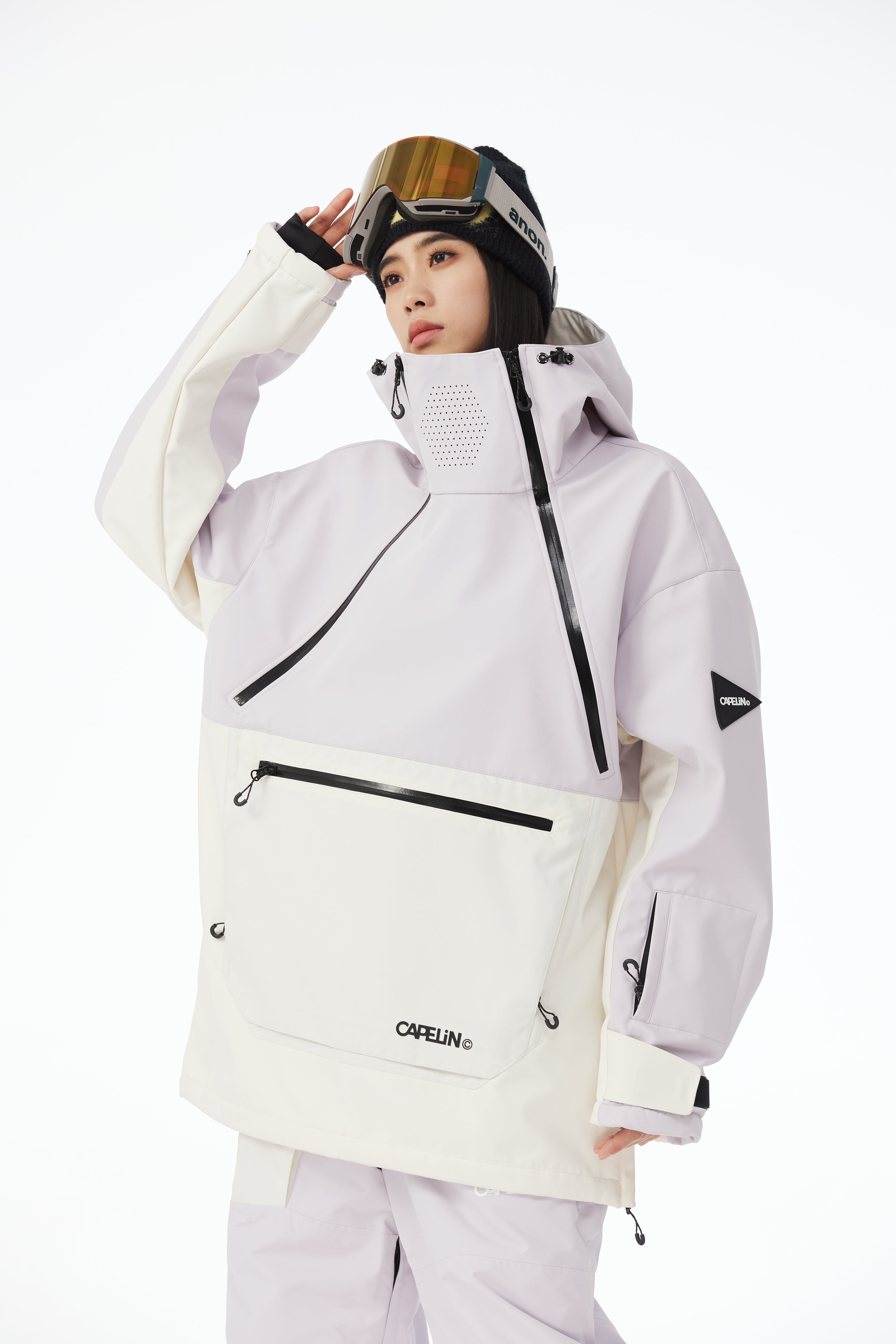
Snow pants aren't just a waterproof shell. They're the difference between cutting a run short at noon and staying on the mountain until the lifts close. Most riders spend more time picking a jacket — but your pants take more of a beating: every fall, every lift chair, every low-crouch through a tight tree line. Get this layer wrong and nothing else compensates.
🔽 Quick Navigation
- 📌 What Exactly Are Snow Pants Protecting? Re-Understanding the Garment Through Functional Logic
- 📌 How to Read Waterproof Ratings: The Real Difference Behind 10K and 20K
- 📌 Shell vs. Insulated: Choosing the Right Version Based on Riding Intensity
- 📌 How Fit Affects Your Movement—It’s More Than Just Comfort
- 📌 The Logic of Layering: Ski Pants & Base Layers—A 5-Dimension Comparative Guide
- 📌 Layering by the Weather: Adapting to Mountain Conditions
- 📌 5 Warning Signs Your Ski Pants Are Failing—How to Tell If It’s Time for an Upgrade
- 📌 Don't let cold, wet, and restriction ruin every run
- ❓FAQ
What Exactly Are Snow Pants Protecting? Re-Understanding the Garment Through Functional Logic

Most people think snow pants = waterproof pants. That's not wrong, but it's incomplete.Your lower body contacts the mountain far more than your upper body does. Sitting on a chairlift in wet snow, absorbing impact on a landing, pressing your knees into a rail — all of that stress lands below the waist. Snow pants need to handle waterproofing, yes, but also windproofing at speed, breathability during hard output, and enough structural flexibility to move with your body rather than against it.
Here's the functional breakdown:
- Waterproofing keeps external moisture — wet snow, slush, rain — from soaking through
- Breathability lets sweat vapor escape so you don't get wet from the inside out
- Windproofing reduces wind chill during fast descents or exposed traverses
- Insulation (in insulated versions) retains body heat in cold, low-activity conditions
The mistake riders make is optimizing for one of these at the expense of the others. A maximally insulated pant that doesn't breathe will leave you soaked in sweat by run three. A lightweight shell with weak seam taping fails the moment you sit in a puddle of slush.
Understanding these four functions together is the foundation of a good purchase decision.
How to Read Waterproof Ratings: The Real Difference Behind 10K and 20K

When you see specs like 20,000mm waterproof / 10,000g breathability, they're telling you something specific — but most riders don't know how to read them.
Waterproof rating (mmH₂O) measures how much water pressure a fabric can resist before it leaks. It's tested by placing a water column on a fabric swatch and measuring when water passes through:
- 0-5,000mm — light rain, dry powder snow
- 10,000mm — moderate rain, wet snow
- 15,000-20,000mm — heavy rain, sustained wet conditions, repeated falls in slush
For most riding conditions in Australia or North America, 10,000mm is the practical minimum. If you're riding wet spring snow, slush, or rain-affected resorts, 20,000mm becomes genuinely useful — not just a marketing number.
Breathability rating (g/m²/24hr) measures how much moisture vapor passes through the fabric in 24 hours. Higher = more breathable:
- 5,000–8,000 — adequate for low-intensity activity
- 10,000–15,000 — good for most snowboarders and skiers
- 15,000+ — suitable for high-output riders or warmer conditions
The key insight: waterproofing and breathability work against each other at a material level. Tighter weaves resist water better but let less vapor through. Quality technical fabrics like those used in Capelin Crew's snowboard pants collection balance both with laminated constructions — bonding a waterproof membrane directly to the outer fabric rather than using a simple coating that wears off.
One more number to watch: seam taping. 100% seam-taped construction matters more than most riders realize. Fabric may be waterproof, but raw seams aren't — taped seams seal every stitch point and prevent the slow, cold seep you'd otherwise feel on a wet day.
Shell vs. Insulated: Choosing the Right Version Based on Riding Intensity

This is the most critical decision when buying snow pants—and the answer depends entirely on how you ride, not just where.
Shell Styles (Non-Insulated):
Shell snow pants feature only a waterproof and windproof outer structure with no built-in insulation. Warmth depends entirely on the base layer worn underneath.
Best for:
- High-output riders who sweat easily
- Those who prefer layering up or down based on the temperature
- Spring skiing, warmer seasons, or resorts with highly variable weather
- All-day park or street riding with fluctuating physical intensity
The trade-off: once you're moving hard, insulated pants can't dump heat fast enough. That trapped warmth becomes trapped sweat — which is exactly the problem insulation was supposed to solve.
Temperature guidance:
- Below -15°C, low activity → insulated pants make sense
- -5°C to -15°C, mixed activity → insulated pants work with ventilation zips open
- Above -5°C or high activity → shell + base layer is almost always more comfortable
How Fit Affects Your Movement—It’s More Than Just Comfort

Fit in snow pants isn't about aesthetics. It directly affects what your body can and can't do on snow.
Why fit affects performance?
Snowboarding and skiing require dynamic movement: deep knee bends, hip rotation, edge transitions, repeated impact absorption. A pant that's too tight through the seat and thigh creates resistance at exactly the moments you need freedom. That resistance causes two problems:
- Restricted range of motion — you can't fully flex your knees or rotate through a turn without fighting the fabric
- Fabric stress — tight pants transfer stress to seams at high-flex points, accelerating wear at knees and crotch
What is an Articulated Fit?
Look for two specific construction features:
- Articulated knees — the pant is pre-shaped in a bent-knee position, so the fabric moves with you rather than pulling tight when you flex
- Gusseted crotch — an extra diamond panel at the crotch allows lateral leg movement without seam strain
These aren't luxury features. On a full day of riding, they're the difference between fatigue from fighting your clothing and fatigue from actual effort.
How to test fit before you buy
Before committing to a pair, run through these movements:
- Deep squat — can you reach parallel without the waist pulling away from your back?
- Single-leg balance with opposite knee raised — does the inner thigh pull tight?
- Forward lean from the hips — does the seat restrict hip hinge?
If any of these feel constrained in-store with nothing layered underneath, they'll feel worse on snow with a base layer added.
Capelin Crew's Baggy Snowboard Pants collection is specifically built for riders who prioritize unrestricted movement — with a relaxed through-the-seat cut that accommodates protective gear underneath without feeling boxy.
The Logic of Layering: Ski Pants & Base Layers—A 5-Dimension Comparative Guide
The pant is only half the system. What you wear underneath determines how well the whole thing works.
| Merino Wool Base | Synthetic Base | |
| Temperature regulation | Excellent — adapts to output level | Good — wicks fast |
| Moisture management | Absorbs and releases gradually | Wicks to surface quickly |
| Odor resistance | Excellent — natural antibacterial | Moderate |
| Drying speed | Slower | Fast |
| Weight | Heavier for equivalent warmth | Lighter |
| Price | Higher | Lower |
For most riders, merino wool base layers are worth the investment — they stay comfortable across a wider temperature range and don't start to smell after two hours of hard output. Capelin Crew's base layer collection includes both merino and technical options suited to different conditions.
Do you need a mid-layer?
With a shell pant: usually no, unless you're riding in sustained sub-20°C conditions or standing still for long periods (instructing, filming, watching).
With an insulated pant: almost never — the insulation is already doing that job.
Layering by the Weather: Adapting to Mountain Conditions

Mild (0°C to -5°C), high activity — Shell pant + lightweight merino base Vent the shell zips when you're moving, close them when you stop.
Cold (-10°C to -20°C), mixed activity — Shell pant + midweight merino base The base does the thermal work; the shell keeps external conditions out.
Extreme cold (below -20°C) — Insulated pant + midweight base Double insulation, but keep activity level in mind — you'll need to open vents aggressively.
Don't neglect what happens below the ankle. Capelin Crew's ski and snowboard socks are designed to work with the boot interface directly — a detail that matters more than most riders expect.
5 Warning Signs Your Ski Pants Are Failing—How to Tell If It’s Time for an Upgrade

Your pants can fail gradually, in ways that aren't obvious until you're wet and cold on the mountain. Here's what to look for before the season starts.
1. Water stops beading on the surface
New snow pants bead water — droplets form and roll off. When the DWR (Durable Water Repellency) coating degrades, water spreads flat across the fabric instead of beading. The fabric hasn't lost its waterproof membrane, but now it absorbs surface moisture and becomes heavy, cold, and slow to dry.
Fix: Wash with a technical cleaner (no fabric softener) and tumble dry on low heat. Heat reactivates DWR. If beading doesn't return after two wash cycles, apply a spray-on DWR treatment.
2. Inner lining feels damp after riding, but outside looks dry
This is usually a breathability failure — the membrane is still keeping water out, but it's no longer letting vapor escape efficiently. Sweat accumulates inside the pant rather than passing through. Often caused by DWR failure (wet outer fabric blocks vapor transmission) rather than membrane damage.
Fix: Same as above — DWR restoration typically solves this.
3. Visible wear or abrasion at cuffs and knees
High-friction contact points — boot cuffs, ground contact on knees — wear through the face fabric first. Once the face fabric is compromised, the waterproof membrane underneath is exposed to direct abrasion and begins to delaminate.
Fix: Fabric repair tape (available at most outdoor retailers) extends life at these points. Not a permanent solution — budget for replacement within a season or two.
4. Seam leakage at inner thighs or crotch
Seam tape can peel or crack after years of flexing and washing. You'll notice cold damp patches at high-flex points even on days that aren't particularly wet.
Fix: Seam sealer can extend life here, but only if the tape hasn't fully delaminated. If the seams are peeling, the waterproof integrity of the pant is compromised.
5. Insulation clumping or cold spots (insulated pants only)
If you notice inconsistent warmth across the pant — warm in some areas, cold in others — the synthetic fill has clumped and redistributed. Usually caused by incorrect washing (especially using hot water or fabric softener).
Fix: Tumble dry with a few tennis balls to break up clumps. If the clumping is severe, fill performance won't fully recover.
Don't let cold, wet, and restriction ruin every run
Get the right snow pants and you won't notice them — just the mountain, the speed, and the turn you just carved. Get it wrong and by the second run your mind starts drifting: are my legs wet, is my crotch cold, is something pulling against my movement.
No single pair works for everyone, but the right pair exists for everyone. High-output riders go shell, cold-prone beginners go insulated, those chasing freedom of movement go relaxed fit, full-day hard chargers don't skip the base layer. Work through those dimensions and the choice isn't complicated.
❓Ski & Snowboard Pants FAQ: Quick Answers to Your Top Questions
Q1: What's the core difference between snow pants and regular outdoor pants?
Regular outdoor pants (cargo, hiking) typically have only a DWR surface treatment — no waterproof membrane. They handle light rain but can't withstand sustained wet snow or the pressure of snow contact during a fall. Snow pants use laminated waterproof fabric where the waterproofing is structural, not surface-dependent — a full grade higher in both durability and waterproof rating.
Q2: Should I size up when buying snow pants?
Depends on what you're wearing underneath. If you're layering protective gear (hip pads, knee guards) or a thicker base layer, size up. Thin base layer only — stick to your normal size, just ensure the articulated knee moves freely. Capelin Crew includes a detailed size chart on every product page; measure your actual waist and hip rather than going by your usual size.
Q3: Won't shell pants be too cold in winter?
Not if your base layer is right. Shell pants don't insulate, but they don't limit what you wear underneath. The logic: insulation inside, protection outside — separate control is more flexible than fixed insulation built into the pants. High output: thin base. Cold and static: thick base. The shell stays the same.
Q4: Can snow pants be machine washed?
Yes, with conditions: cold water, gentle cycle, technical detergent, no fabric softener. Softener clogs the fabric's micropores, degrading breathability and accelerating DWR breakdown. After washing, tumble dry on low — the heat is what reactivates the DWR. Air drying won't do it.