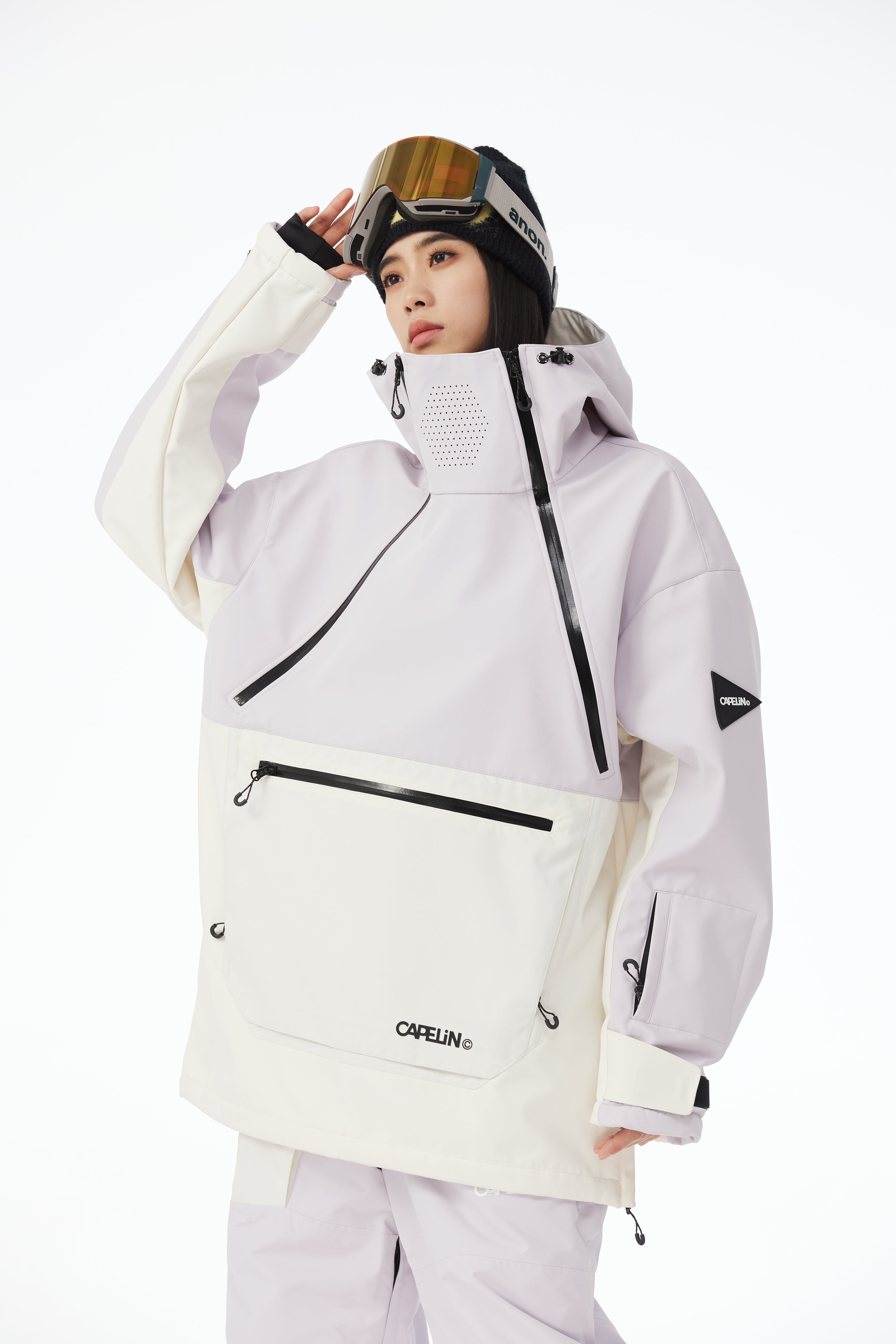
Many people are willing to spend a lot of money on snowboards and outerwear, but they are quite "casual" when it comes to socks. It's just a pair of socks, right? As long as they're thick and warm, isn't that enough? But more often than not, it's this unremarkable pair of socks that can turn your day on the slopes from "riding the wind and waves" to "barely moving an inch." Cold, wet feet, a suffocating stuffiness inside the boots, or several blisters rubbed raw by the stiff shell—the culprit behind these horrible experiences is very likely the ordinary cotton socks you casually pulled on. It's no exaggeration to say that choosing the right snow sock is the single highest-return investment you can make in your entire snowboard gear setup.
🔽 Quick Navigation
- 📌 A Painful Lesson from Going "Barefoot" in Boots
- 📌 What Exactly Makes a Professional Snow Sock "Professional"?
- 📌 The "Right" Sock: The Capelin Crew SnowPaw Collection
- 📌 Snow Socks and Outerwear: The Philosophy of Matching the Details
- 🧭 Conclusion
- ❓FAQ
A Painful Lesson from Going "Barefoot" in Boots
In the winter of 2022, in Whistler, Canada, the mecca for snowboarders worldwide.
Sarah Mitchell, a software engineer from Toronto, finally embarked on a snowboard trip that she and her friends had been planning for a whole year. Before departure, she meticulously checked her snowboard, helmet, and outerwear, but when it came to packing her socks, she got lazy—"They're just socks, right? I can just wear a pair of thick everyday cotton socks. Why spend dozens of dollars on special snow socks?"
On the first morning, Sarah hit the slopes with great excitement. The first two runs went smoothly, but by the third run, she began to feel a numbness in her toes and a vague, uncomfortable friction against her heel inside the boot. She didn't pay much attention to it, thinking "It'll get better once I get into the flow."
By the afternoon, the situation took a sharp turn for the worse. With every turn, a sharp, piercing pain shot from her heel. She gritted her teeth and managed two more runs, but she simply couldn't take it anymore and had to retreat to the cabin at the base early. The moment she took off her snowboard boots, she gasped—
A blister the size of a thumbnail had formed on her right heel. The skin had been rubbed raw, and the oozing fluid had stuck the sock to the wound. The big toe on her left foot was red and purplish, and it was almost numb to the touch.
For the remaining four days of her vacation, Sarah spent most of her time in the cabin. The wound on her heel made even walking normally a painful, limping ordeal, let alone getting back on the slopes. In the photos her friends took on the mountain, she could only be seen wrapped in a blanket, sitting by the fireplace, staring wistfully out the window.
The absurdity of this story is that she wasn't unable to afford professional snow socks; she simply didn't take it seriously. And the price she paid was far steeper than a pair of socks.
What Exactly Makes a Professional Snow Sock "Professional"?

This real-life story perfectly illustrates that snowboard socks are far more than a simple accessory for warmth. The difference between them and regular cotton socks is like night and day.
First and foremost, material is the soul. Professional snow socks almost exclusively use merino wool as their core material. This is because merino wool fibers can absorb moisture from your feet when they sweat and rapidly wick it away, keeping your feet dry. Regular cotton socks do the exact opposite—they absorb sweat but don't wick it away. The moisture gets trapped in the boots, becoming not only wet and cold but also dramatically increasing friction, which is a surefire recipe for blisters. This is the origin of the golden rule in snowboarding: "Cotton is the enemy of snowboarding."
Secondly, design is the key. The functional zoning of snow socks is very sophisticated, functioning like a custom-made "armor" for your feet:
-
Strategic Cushioning and Zoning: Thickened cushioning is applied to areas prone to pressure or impact, such as the shin, ankles, and the soles of the feet. This protects the shin bone and reduces foot fatigue.
-
Precise Compression and Support: The sock shaft uses a spiral or elastic compression structure to provide support for the calf muscles, promote blood circulation, and prevent legs from swelling due to prolonged standing. An elastic band at the arch provides firm support, preventing the sock from shifting.
-
Appropriate Thickness: To maintain a precise feel for the snowboard, professional snowboard socks are typically designed to be medium-thin. An overly thick sock will take up space inside the boot, restrict blood flow, make your feet feel colder, and significantly reduce your control and precision.
The "Right" Sock: The Capelin Crew SnowPaw Collection

If you're looking for a pair of professional snowboard socks that can accompany you on the slopes while offering both comfort and performance, the SnowPaw Merino Wool Over-the-Calf Snow Socks from Capelin Crew are worthy of your attention. Currently, they are available in two classic colors: White and Black.
This snow sock translates all the professional features mentioned above into every detail:
-
Core Material: Made from a blend of 17.5μm fine merino wool, it feels soft and gentle against the skin while offering excellent warmth, breathability, and natural odor resistance, so you can say goodbye to "cold, wet feet" on the slopes.
-
360-Degree Elastic Compression: Provides stable, even compression from the ankle up to the calf. This not only reduces internal friction inside the boot but also provides muscle support, alleviating post-activity soreness and fatigue.
-
Full Functional Details:
-
Stretchy Cuff: Comfortable and snug fit, preventing the sock from slipping down while avoiding unsightly pressure marks.
-
Thickened Terry Loop: Provides extra cushioning in key impact zones to absorb shock.
-
Arch Support: Securely wraps the arch, keeping the sock integrated with the foot—no sliding, no twisting.
-
Reinforced Toe: Strengthens the area prone to wear, enhancing durability for many seasons to come.
-
-
User-Validated Quality: A customer, Arsking from Los Angeles, commented after his experience: "Obsessed with these!! I grabbed two colors at once because I just couldn't choose. The length is amazing — it covers and protects my calves perfectly so no more irritation from snowboard boots. And the merino wool is absolutely no joke, lives up to every bit of the hype. 100% worth it!"
Snow Socks and Outerwear: The Philosophy of Matching the Details

When you're fully geared up in your snowboard outerwear, the small section of your snow sock that might peek out is, in fact, a part of your overall look and function. An excellent snow sock aims for "the invisible to appear visible" —a seamless integration.
Its length is typically over-the-calf or knee-high, ensuring that once fully enclosed by the snowboard boot, the skin of your calf is not in direct, chafing contact with the rigid boot cuff. The top of the sock should be neatly covered by the leg of your snowboard pants, preventing snow from entering while avoiding any unsightly bunching.
When it comes to color choices, basic black, white, and grey socks are the most versatile, allowing you to keep the visual focus on your outerwear. If you want to express a bit of personality in the details, you can choose socks that echo a splash of color from your jacket or protective gear, which will elevate the overall look.
But remember: function always comes before aesthetics. The primary task of a qualified snow sock is to sit flat and wrinkle-free inside the boot, because any extra fold of fabric can, at high speeds, become the "culprit" that disrupts your foot's sensitivity and feel for the board. You can think of it as a low-key but never-compromising "base tone" in your snowsport outfit.
Conclusion
Back to the initial question: Are professional snow socks a necessity or a gimmick?
Sarah Mitchell gave her answer with a ruined vacation. Those whose snowboarding experiences have been transformed by the right pair of socks have given the same answer. Professional snow socks aren't meant to make you ride faster; they're meant to allow you to ride longer, safer, and with greater enjoyment. They resolve all the potential friction, dampness, and discomfort between you and your boot.
Next time you pack for the slopes, treat choosing a pair of professional snow socks with the same seriousness as you do your snowboard. Because only when your feet are comfortable can you focus completely on chasing that fresh powder at the top of the mountain.
FAQ
Q1:Can I use running or hiking wool socks as a substitute for snow socks?
A1:Not recommended. While the materials may be similar, snowboard socks feature specialized zonal cushioning (e.g., at the shin and ankle) and 360-degree compression design, which are optimized to maintain foot stability and blood circulation inside the rigid snowboard boots. Regular sports socks lack these targeted structural features.
Q2:Do I need to wash my snow socks after every use?
A2:It is highly recommended to wash them after each use. Although merino wool has natural odor-resistant properties, your feet sweat heavily while snowboarding. The salt and bacteria in the sweat can degrade the wool fibers over time, affecting their elasticity and thermal performance. Machine wash on a gentle cycle or hand wash in cold water with a wool-specific detergent, and let them air dry naturally.