🔽 Quick Navigation
- 📌 Capelin Crew Technical Breakdown
-
📌 Durable Water Repellent (DWR) Treatment
- 📌 Understanding Waterproof Ratings
- 📌 2-Layer Fully Seam Taped Construction
- 📌 Warm & Heat Retention Padding
- 📌 Why These Details Matter
- 🧭 Conclusion
- ❓ FAQ
Capelin Crew Technical Breakdown
After understanding the basics of waterproof ratings and breathability in snowboard jackets, what truly sets high-quality gear apart comes down to fabric construction and technical details
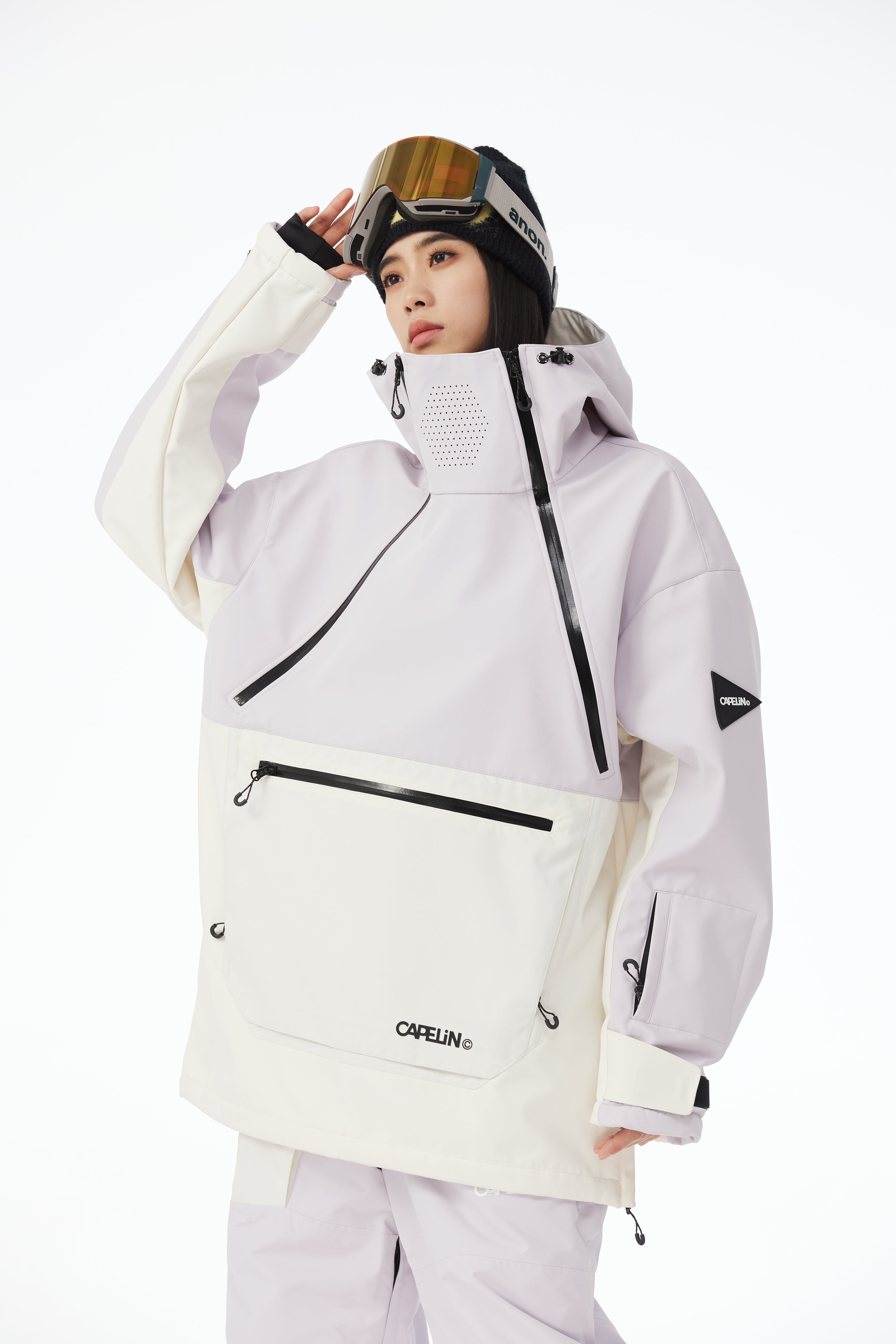
Capelin Crew snowboard jackets are engineered around these critical elements, delivering reliable performance and comfort in real mountain conditions.
Durable Water Repellent (DWR) Treatment|he First Line of Defense Against Moisture
All Capelin Crew fabrics are treated with a PFC-Free, eco-friendly Durable Water Repellent (DWR)finish.
What does this mean in real use?
- • Water beads up and rolls off the fabric surface
- • The outer layer resists saturation
- • Reduced “surface chill” caused by wet fabric
DWR is not the waterproof membrane itself, but it significantly enhances overall waterproof performance while helping the jacket stay dry and breathable.
Being PFC-Free, this treatment is also safer for the environment and gentler on the skin.

2-Layer TPU Laminated Fabric
The Core of Waterproof & Breathable Performance
Capelin Crew uses a 2-layer TPU laminated fabric, a proven and reliable construction widely used in high-performance snowboard jackets.
Fabric structure:
- • Outer layer: Durable, abrasion-resistant woven fabric
- • Inner layer: Waterproof and breathable TPU membrane
Key advantages:
- • Effectively blocks snow and moisture penetration
- • Continuously releases internal moisture during intense riding
- • Tough enough for frequent falls and sitting on snow
Even during long sessions and high-intensity riding, the fabric helps keep you dry and comfortable.
Understanding Waterproof Ratings in Snowboard Jackets
Waterproof performance is commonly measured using hydrostatic head (mm), indicating how much water pressure a fabric can withstand before leaking.
Snowboard Jacket Waterproof Rating Guide
| Waterproof Rating | Protection Level | Recommended Use |
|---|---|---|
| 5,000 mm | Basic water resistance | Light snow, occasional riding |
| 10,000 mm | Standard snowboard protection | Resort riding, most riders |
| 15,000 mm | High waterproof performance | Frequent riding, snowy climates |
| 20,000 mm+ | Professional-grade protection | Backcountry, wet snow, severe weather |
👉 For most snowboarders, 10,000–15,000 mm offers the best balance between protection and comfort.
2-Layer Fully Seam Taped Construction
Solving the Most Common Leak Points
Many riders don’t realize that seams are the weakest points of any snowboard jacket.
Capelin Crew jackets feature:
- • Fully seam-taped construction
- • High-performance waterproof adhesive tape applied to all seams
Why this matters:
- • Prevents water from entering through needle holes
- • Ensures the waterproof rating performs as intended
- • Provides confidence when sitting on snow or riding in wet conditions
This detail often separates average snowboard jackets from truly high-quality ones.
Warm & Heat Retention Padding
Lightweight Insulation Without Sacrificing Breathability
Beyond waterproofing and breathability, warmth is equally essential.
Capelin Crew uses:
- • Fluffy, compressible, lightweight insulation
- • Warm without being bulky
Real-world benefits:
- • Retains heat efficiently
- • Allows full freedom of movement
- • Maintains breathability and reduces sweat buildup
This insulation system is used in both snowboard jackets and pants ensuring consistent thermal comfort.

Why These Details Matter for Snowboard Jackets
When combined, these technologies directly address the core challenges of snowboarding:
- • DWR treatment → Keeps the outer fabric dry and comfortable
- • 2-Layer TPU laminated fabric → Balances waterproofing and breathability
- • Fully seam-taped construction → Prevents leakage despite high ratings
- • Lightweight insulation → Warmth without bulk or overheating
👉 This is how a high-performance snowboard jacket should function on the mountain.

Conclusion: A Great Snowboard Jacket Is More Than Just Numbers
While waterproof and breathability ratings matter, true performance depends on:
- • Fabric construction
- • Waterproof treatments
- • Seam sealing
- • Overall balance between warmth and ventilation
Capelin Crew snowboard jackets are designed with these details in mind, ensuring waterproofing, breathability, and warmth work together where it counts most—on the snow.
Snowboard Jacket Waterproof & Breathability FAQ
Q1: Is a higher waterproof rating always better for snowboard jackets?
Not necessarily.
Higher ratings resist more water pressure but can reduce softness and breathability.
For most riders, 10,000–15,000 mm provides excellent protection without compromising comfort.
Q2: Is a 10,000 mm snowboard jacket enough for heavy snow?
Yes, in most resort conditions.
However, if you frequently sit on snow, ride wet snow, or snowboard during continuous snowfall, 15,000 mm or higher offers added peace of mind.
Q3: Why do some jackets leak despite high waterproof ratings?
Because waterproof performance also depends on:
-
• Fully seam-taped construction
-
• Waterproof zippers
- • DWR surface treatment
Without sealed seams, water can enter through stitch holes.
Q4: What is DWR, and does it affect breathability?
DWR causes water to bead and roll off the fabric surface.
It does not block the membrane and actually helps maintain breathability by preventing fabric saturation.
Proper washing and care help restore DWR performance.
Q5: Is higher breathability always better?
No. Breathability must be balanced with warmth and waterproofing.
High breathability benefits aggressive riders, but in very cold or low-activity conditions, excessive breathability may lead to heat loss.
Q6: How should I interpret breathability ratings (g/m²/24h)?
-
• 5,000 g: Light riding, may feel clammy
-
• 10,000 g: Comfortable for most snowboarders
- • 15,000 g+: Ideal for high-intensity or long sessions
👉 10,000–15,000 g is the most versatile range.
Q7:Why can’t snowboard jackets be completely waterproof?
Because real-world riding involves:
-
• Prolonged pressure when sitting on snow
-
• Fabric stretching and movement
- • Zippers, seams, and ventilation openings
Snowboard jackets aim for reliable waterproof protection, not laboratory-level absolute waterproofing.
Q8: What’s the difference between 2-layer, 2.5-layer, and 3-layer fabrics?
-
• 2-layer: Comfortable, versatile, ideal for most riders
-
• 2.5-layer: Lighter, slightly less durable
- • 3-layer: Maximum durability and performance for backcountry use
Q9: Should snowboard jackets be washed regularly?
Yes. Proper washing actually helps maintain breathability.
Sweat and dirt can clog membranes and reduce moisture transfer.
Use technical garment detergents and reapply DWR when needed.
Q10: Are ventilation zippers necessary?
Absolutely—especially for snowboarding.
They allow:
- • Rapid heat release
- • Reduced reliance on high breathability alone
- • Better temperature control during variable conditions