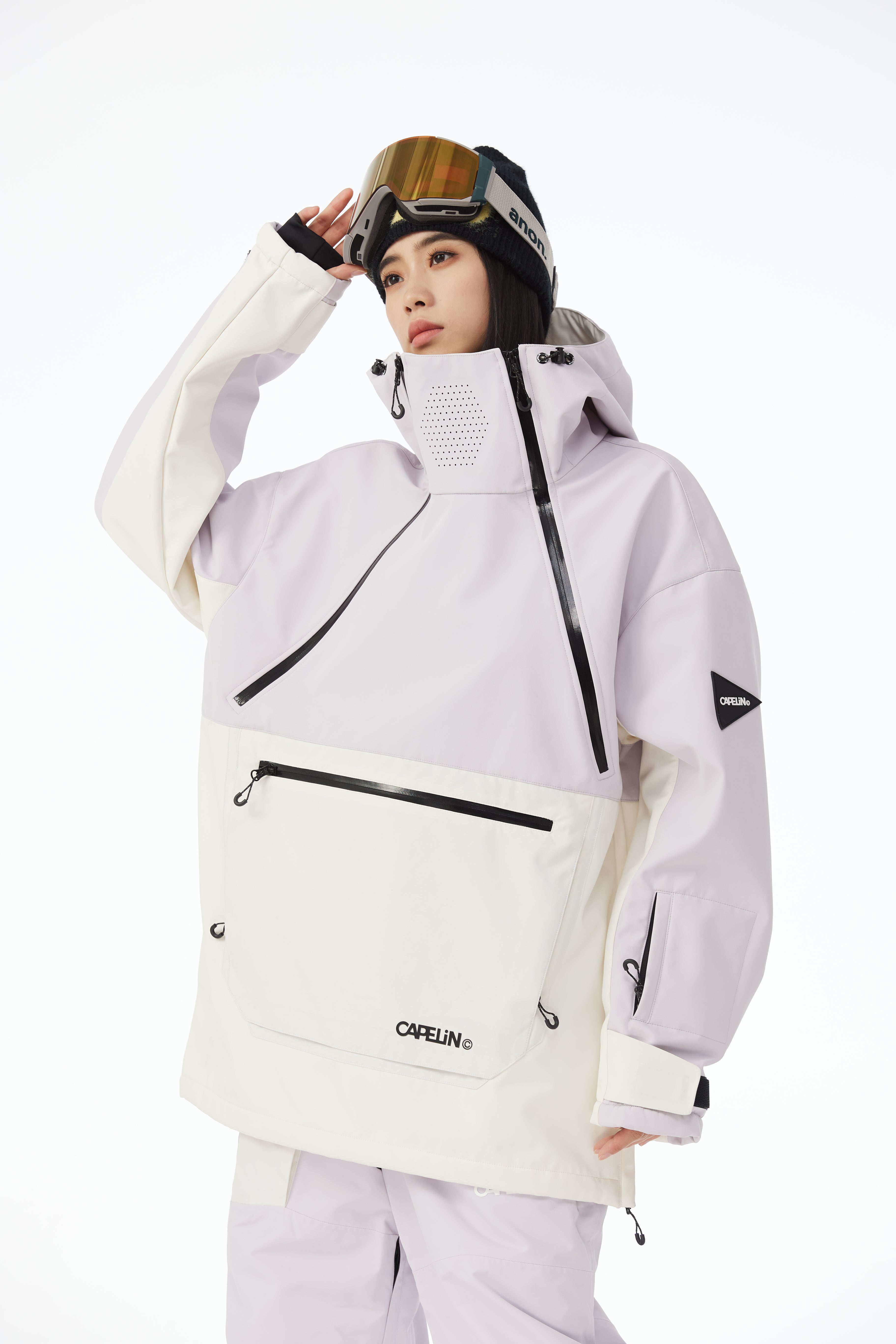
Most riders spend hours comparing jackets and then grab whatever snow pants are left. That works until you sit down in the lift line and feel snow creeping in at the waist. Women's snow bib pants solve this by extending the coverage up over your core and holding everything in place with shoulder straps. The catch is that a bib has more places to fit wrong than a regular pair of pants.
This guide walks through those fit points one by one. We cover torso length, straps and waist adjustment, what to wear underneath, and how to read the technical specs on waterproof snow bibs.
🔽 Quick Navigation
- 📌 Why Women's Snow Bib Pants Are Worth Considering
- 📌 Torso Length and Rise: Getting the Vertical Fit Right
- 📌 Straps, Waist, and Leg Openings: Adjustability That Actually Helps
- 📌 What to Wear Under Women's Snow Bib Pants
- 📌 Reading the Specs: Waterproofing, Breathability, and Venting
- 📌 Conclusion
- ❓FAQ
Why Women's Snow Bib Pants Are Worth Considering

A bib snow pant works like regular snow pants with a high front panel that covers your stomach and chest. Two adjustable straps hold it up, so there is no tight waistband digging into your hips. The most practical benefit is that the gap between your jacket and your pants disappears. That gap is one of the most common places for snow to get in after a fall, which is exactly what a bib is built to prevent.
For many riders, snow bibs for women also feel more comfortable than waist-fastened pants. Without a belt line pressing on your midsection, there is less pinching when you sit, squat, or strap into bindings. The extra panel also adds core warmth and often adds pockets, since a chest pocket is easy to reach with gloves on.
There are trade-offs. Bibs take a little longer to take off, and they can run warm on spring days. Still, if you ride full days, fall often while learning, or spend time in deep snow, women's snowboard bibs are one of the most useful pieces you can own. The rest of this guide helps you pick a pair that actually fits.
Torso Length and Rise: Getting the Vertical Fit Right

Standard pants only need to fit your waist, hips, and inseam. Women's bib snow pants add a fourth measurement: the distance from the top of your shoulder down to your crotch and back up. If that torso length is too short, the straps pull tight when you bend, and the crotch rides up. If it is too long, the bib sags and the extra fabric bunches at your hips.
A simple home test helps. Put the bibs on over your base layer, adjust the straps to a comfortable length, and then try three movements:
- Squat as if you were strapping into a binding.
- Bend forward to touch your toes.
- Reach both arms overhead.
The straps should stay on your shoulders, the front panel should not pull away from your chest, and your lower back should stay covered. If any of those fail, try a different size before you blame the style.
Hip and thigh room matter as well. If your lower-body measurements fall between sizes, our women's snowboard pants fit guide walks through the waist, hip, thigh, and hem problems riders run into most often. Many of the same fixes apply to bibs too.
Straps, Waist, and Leg Openings: Adjustability That Actually Helps

Adjustability is what turns a decent bib into a great one, because no two bodies are built the same. A good pair of snowboard bib pants should let you tune the fit in at least three places.
Shoulder straps. Look for straps that slide easily and lock in place. Elastic or flexible straps are more forgiving when you bend, but they should not stretch so much that the bib sags during the day.
Waist closure. Some bibs include a waist tab so you can fine-tune the fit around your midsection. The Echo Unisex Snowboard Bib Pant is one example: according to its product page, it combines adjustable straps with an adjustable Velcro waist and a central front zipper for easier on and off. It also includes an adjustable zip leg opening, which helps if you wear different boots or layer up on colder days.
Leg cuffs and gaiters. Internal snow gaiters seal the pant leg around your boot. The Echo lists these as a built-in feature. Always check the brand's size chart instead of guessing from your usual pants size, because bib cuts vary from one brand to the next.
Because the Echo is a unisex cut, it is worth checking the size chart carefully if you are between sizes. Riders who prefer a relaxed, roomy silhouette often go with their regular size, while riders who want a closer fit may prefer to size down.
What to Wear Under Women's Snow Bib Pants

A bib covers more of your body than regular pants, so your layering choices matter more. The general rule is to build from a moisture-wicking base, add insulation only as needed, and avoid cotton, which holds sweat and chills you fast. The Appalachian Mountain Club's cold-weather layering guide makes the same point: stick to wicking materials such as wool or synthetics, and skip cotton in every layer.
Base layer: Choose a snug synthetic or merino base layer. Fitted leggings work well for the legs.
Mid layer: On cold days, add a thin fleece or lightweight insulated layer on your torso. Because the bib already covers your core, you often need less bulk than you think.
Socks: Pull long socks up over your base layer so there are no gaps near the boot cuff.
Your jacket and bibs should work together as a system, with the jacket hem falling well over the bib's top edge. Our guide to layering under a women's snowboard jacket breaks down what to wear at different temperatures, and most of that advice carries over to the upper half of a bib setup.
One practical tip: do your layering test indoors with the bibs fully zipped and strapped. If you feel warm after five minutes in a heated room, you will likely be comfortable on the mountain. If you feel hot after two minutes, you have too much insulation for your insulated snow bibs or you may prefer a shell.
Reading the Specs: Waterproofing, Breathability, and Venting

Product pages are full of numbers, and they are easier to use once you know what each one means. Waterproof ratings are measured in millimeters, while breathability is measured in grams of moisture vapor passing through the fabric per square meter per day. Higher numbers generally mean stronger performance, though construction details matter just as much. If you want a deeper look at how the test works, SectionHiker's explainer on hydrostatic head covers how fabrics are measured and why seam sealing and breathability matter alongside the rating.
The table below summarizes what to look for in waterproof snow bibs based on how you ride.
| Riding Style | Waterproof Rating | Breathability | Insulation | Key Features |
|---|---|---|---|---|
| Resort days in cold, dry snow | 10,000 mm and up | Moderate | Insulated or light shell | Boot gaiters, secure pockets |
| Wet, heavy snow or frequent falls | 15,000–20,000 mm | High | Shell plus layers | Taped seams, thigh vents |
| Powder and long days | 20,000 mm and up | High (15,000 g+) | Shell for flexible layering | Adjustable cuffs, chest pocket |
| Spring and warm weather | 10,000–15,000 mm | Very high | Uninsulated shell | Large vents, lightweight fabric |
Insulation is a personal choice. Many riders prefer a shell with layers underneath because it handles a wider range of temperatures, while insulated bibs suit riders who run cold or ride in consistently low temperatures.
For a shell option, the Saturn Unisex 3L Shell Snowboard Bib Pant uses a three-layer shell construction, which is generally lighter and more breathable than insulated pants. A shell like this suits riders who run warm or who like to adjust their warmth with base and mid layers. For riders who want a ready-made waterproof setup with built-in vents, the Echo's 20,000 mm rating, 15,000 g breathability, and taped seams are a solid benchmark when comparing other women's ski bib pants.
Conclusion
Choosing women's snow bib pants comes down to a few practical checks. Start with torso length so the straps and crotch sit comfortably. Make sure the straps, waist, and leg cuffs can adjust to your body. Plan your layers so you stay dry without overheating. Then use the waterproof and breathability numbers to match the bib to the way you ride.
Bibs are not for everyone, and a good pair of regular snow pants still makes sense for spring laps or quick days. But if you want more coverage, more warmth through your core, and fewer gaps where snow can sneak in, a well-fitted pair of snow bib pants for women is worth trying. Browse the full women's snow bib pants collection to compare current colors and sizes before the season starts.
❓FAQ
Q1: How should women's snow bib pants fit?
They should feel comfortable standing, squatting, and bending. The straps should stay on your shoulders, the front should not pull away from your chest, and the cuffs should cover your boots without dragging on the ground.
Q2: Are snow bibs warmer than regular snow pants?
Generally yes, because the bib panel adds coverage over your core and closes the gap between your jacket and pants. Warmth still depends on insulation and layers, so choose based on your climate.
Q3: Can I wear a bib for both skiing and snowboarding?
Yes. Bibs are used for both sports. Just check that the cut gives you enough room to bend your knees and rotate your hips for your chosen sport.
Q4: What waterproof rating do I need in snow bibs?
For cold, dry resort days, 10,000 mm is usually enough. For wet snow, frequent falls, or spring conditions, aim for 15,000–20,000 mm along with taped seams.
Q5: Should I pick insulated or shell bibs?
Shell bibs are more versatile because you control warmth with your layers. Insulated bibs suit riders who run cold or ride in consistently low temperatures.