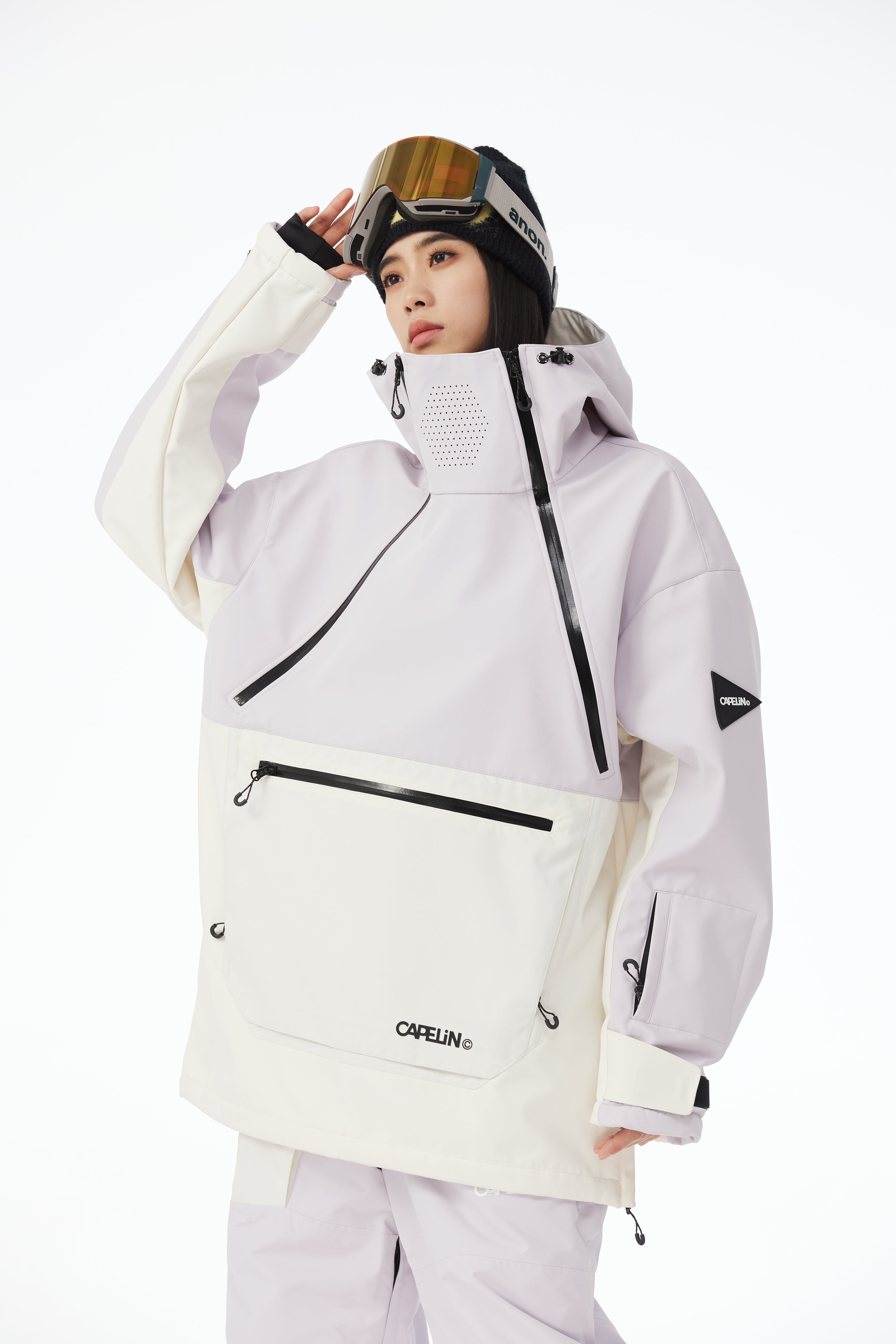
Once the fit is sorted, the next important decision when buying a women's snowboard jacket comes down to insulation type — insulated or shell. This choice has a bigger impact on comfort than many riders expect. Choose the wrong option, and you may end up overheating in a jacket designed for high-output backcountry skiing, or feeling cold on the chairlift in a shell that was never meant to be worn alone.
The key is matching the jacket to your skiing style, activity level, and typical snow conditions. Insulated jackets provide built-in warmth and convenience, while shell jackets offer greater layering flexibility and breathability. Here’s how to choose the right option based on how you actually ski.
🔽 Quick Navigation
- 📌 Insulated vs. Shell: Key Structural Differences
- 📌 When an Insulated Snowboard Jacket Makes Sense
- 📌 When a Shell Is the Smarter Pick
- 📌 Waterproof Rating and Breathability: What the Numbers Mean
- 📌 Matching the Jacket to Your Riding Style
- 📌 Conclusion
- ❓FAQ
Insulated vs. Shell Ski Jackets: Key Structural Differences

Women’s Insulated Snowboard Jackets
Women’s insulated snowboard jackets integrate synthetic or down-like insulation between the waterproof outer fabric and inner lining, combining warmth and protection in one piece. With built-in insulation, they can usually be worn with only a moisture-wicking base layer, making them ideal for skiers who prefer a simple and lightweight layering system.
Shell Snowboard Jackets
A shell snowboard jacket, on the other hand, is a pure outer layer with no built-in insulation. It relies on a modular layering system, allowing you to add or remove mid-layers such as fleece or insulated jackets based on weather conditions and activity levels.
Neither option is better than the other. Insulated jackets and hardshell jackets are designed for different skiing styles, temperatures, and body-heat-management needs. The best choice depends on your skiing intensity, local conditions, and how easily you feel cold.
When an Insulated Snowboard Jacket Makes Sense

Insulated snowboard jackets are ideal for skiers who spend relatively more time standing still than actively riding, such as when waiting in lift lines, riding chairlifts, resting in mountain lodges, or practicing basic turns at lower intensity. For these skiers, consistent warmth is more important than maximum breathability, because staying in cold environments for longer periods can quickly lead to feeling chilled.
Since the insulation layer is already built in, the biggest advantage of insulated jackets is convenience and simplicity. There is no need to constantly adjust mid-layer combinations, and they are often lighter and cleaner than a hardshell paired with separate insulation. Especially on cold ski days, built-in insulation helps maintain a comfortable body temperature during low-intensity activities.

For example, the Darkwave Women’s Snowboard Jacket is an insulated ski jacket designed for everyday skiing and cold-weather conditions. It features built-in insulation combined with a 2-layer waterproof fabric, fully taped seams, and DWR water-repellent treatment to provide warmth while handling light snow and damp, cold environments. For riders who mainly cruise groomed slopes, enjoy casual skiing, or spend most of their time using lifts, Darkwave offers a simpler and more comfortable wearing solution.
When a Shell Is the Smarter Pick

Hardshell jackets are better suited for skiers who generate a lot of body heat, including advanced and expert skiers with high vertical descents, freestyle riders who repeatedly lap the park and hike for jumps, and anyone who needs to climb or hike into backcountry terrain. Since hardshell jackets have no built-in insulation, warmth is fully controlled by the mid-layers you choose, making them especially practical for days with freezing mornings and much warmer afternoons.
A hardshell is also a more versatile, multi-season option. By adjusting the thickness of your mid-layer, one high-quality shell can be used from the first cold days of winter through the spring corn-snow season. For skiers who explore different snow conditions and switch between groomed runs, park sessions, and backcountry adventures, a high-performance shell like the Alpha Unisex 3L Shell Snowboard Jacket provides more flexible layering options while reducing the need to own multiple insulated jackets.

For example, the Alpha Unisex 3L Shell Snowboard Jacket features a three-layer shell construction without added insulation, focusing on waterproofing, wind protection, and breathability. It allows riders to customize their layering with fleece, mid-layers, or lightweight down jackets depending on weather and activity levels. Its 3L TPU composite fabric, fully taped seams, and underarm ventilation zippers help release excess heat during high-intensity skiing while keeping riders dry in windy and snowy conditions.
Waterproof Rating and Breathability: What the Numbers Mean

Most women’s snowboard jackets list a waterproof rating, commonly 10K–20K, and a breathability rating measured the same way. In practice, 10K is enough for light, dry snow and short storms; 15K–20K holds up better through wet, heavy snowfall or a full day of sitting in slush on the chairlift.
Breathability matters more the harder you are working. A rider hiking for backcountry lines or lapping park jumps generates more internal moisture than someone cruising groomers, so a higher breathability rating—paired with pit zips, if the jacket has them—prevents that sweat from turning cold and clammy once you stop moving. Neither number matters in isolation; a highly waterproof jacket with poor breathability will still leave you damp from the inside on a high-effort day.
Matching the Jacket to Your Riding Style

If you spend most of your skiing time cruising on groomed slopes and the lift waiting time is relatively long, an insulated snowboard jacket can easily handle most situations without requiring complicated layering. If you mainly focus on terrain parks and freestyle skiing, where you are almost constantly active and fall more frequently, a loose-fitting shell snowboard jacket is more recommended. The relaxed cut provides enough room for repeated practice, while also making it easier to adjust your body temperature dynamically by adding or removing layers.
For backcountry powder skiing that requires uphill hiking or multi-day ski touring trips, a breathable shell jacket is almost essential. Jackets with built-in insulation can easily cause excessive heat buildup and heavy sweating during ascents. After reaching the summit and taking a break, the damp inner layers can make your body lose heat quickly, leaving you cold and uncomfortable.
Conclusion
The insulated-versus-shell decision for a women’s snowboard jacket comes down to how much you move and how much you sweat, not which option sounds warmer on paper. Insulated jackets reward riders who spend real time standing still in the cold; shells reward riders generating consistent body heat who need to control warmth by layering.
Match the jacket to your actual pattern of movement on the mountain, and the waterproof and breathability ratings become the details that fine-tune the choice rather than the decision itself.
❓FAQ
Q1: Can I wear an insulated women's snowboard jacket for spring skiing, or will it be too warm?
It can run warm on sunny spring days, especially with exertion — many insulated jackets have pit zips or underarm vents specifically to manage this, but if you ski frequently into spring, a shell with a removable mid-layer generally offers more flexibility.
Q2: Is a 3L shell warmer than a 2L insulated jacket?
Not necessarily — the "L" number refers to fabric layers and construction, not warmth. A 3L shell has no built-in insulation at all and relies entirely on what you wear underneath, while a 2L insulated jacket has actual warmth built into the garment regardless of its layer count.
Q3: Do I need a higher waterproof rating for snowboarding than skiing?
Generally yes, if you ride regularly — snowboarders sit down far more often between runs, which means more direct, prolonged contact with wet snow than most skiers experience, so a 15K+ rating tends to hold up better over a full season of snowboarding.
Q4: Can I layer a mid-layer underneath an insulated women's snowboard jacket on very cold days?
Yes, most insulated jackets have room for a thin base or light mid-layer underneath, but check the specific fit — a slim-cut insulated jacket may not have room for much beyond a base layer, while a regular fit typically allows for one additional thin layer.