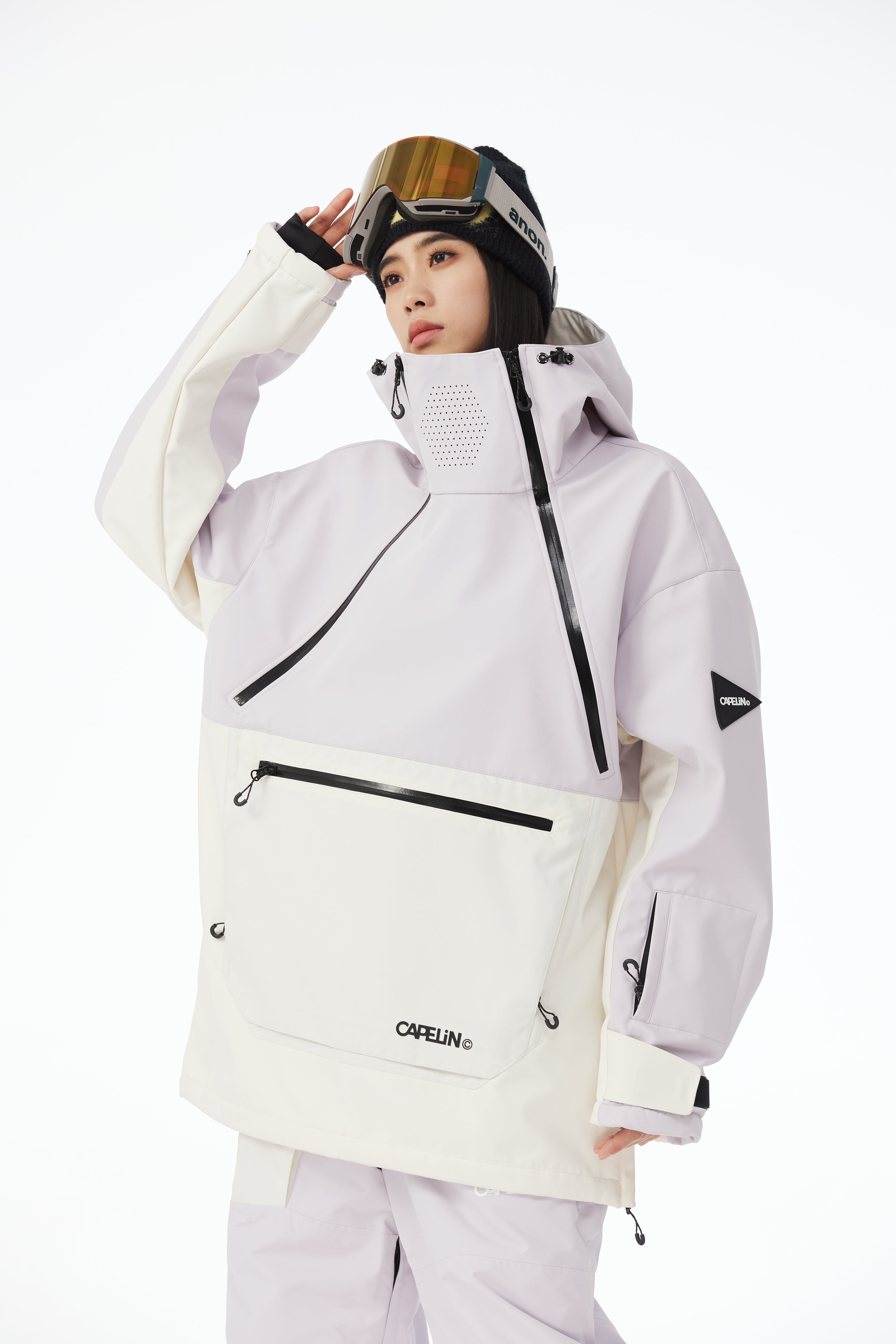
U.S. ski resorts are concentrated mainly in two mountain systems: the Rockies (Colorado, Wyoming, Montana), known for high elevation and dry powder, and the Sierra Nevada/Cascades further west, known for heavier, wetter snow at lower elevations. Vail Resorts and Alterra's Ikon network now own many of the best-known names, though independent resorts like Jackson Hole still operate on their own.
Here we introduce three Rocky Mountain resorts: Vail, Aspen Snowmass, and Jackson Hole.
🔽 Quick Navigation
Vail Ski Resort

Eagle County, Colorado · Owned & Operated by Vail Resorts
| Skiable Area | 5,317 acres (2,151 hectares) — third-largest single-mountain ski area in the U.S. |
|---|---|
| Trail Count & Levels |
195 named trails ● 18% Beginner ■ 29% Intermediate ♦ 53% Advanced / Expert |
| Terrain Zones | Front Side (1,655 acres), Back Bowls (3,017 acres), Blue Sky Basin (645 acres) |
| Summit Elevation | 11,570 ft (3,527 m) at Blue Sky Basin's high point |
| Base Elevation | 8,120–8,220 ft (2,475–2,505 m) |
| Vertical Drop | 3,450 ft (1,052 m) |
| Lifts | 31 total, including two gondolas and a heavy mix of high-speed quads and six-packs |
| Longest Run | Riva Ridge — approx. 4 miles (6.5 km) |
| Opened | 1962 |
On the Mountain
Vail opened in 1962 and is the flagship resort of Vail Resorts. What sets it apart is scale combined with variety: the Front Side is wide and groomed, good for cruisers and intermediates.
The Back Bowls — seven bowls across the south face — open into large alpine terrain that skis like backcountry once the snow is fresh. Blue Sky Basin, the newest zone, adds glades and meadows reached by a longer lift ride.
Vail suits a wide range of ability levels, from families to expert powder skiers, depending on which of the three zones you choose.
Beyond the Slopes
Vail Village and Lionshead Village sit at the base of the mountain, both walkable and full of lodging, restaurants, and après-ski bars.
The town is about 100 miles west of Denver on I-70, roughly two hours by car, or a short flight into the regional Eagle County Airport (EGE), which runs direct flights during ski season.
Worth adding to a trip: the Gore Range views from the gondola, the hot springs in Glenwood Springs (about 45 minutes away), and Beaver Creek, Vail's quieter sister resort down the valley.
Base elevation sits above 8,000 feet, so plan a light first day and drink more water than usual.

On-Mountain Layering
Vail's split personality — mellow groomers on the Front Side, deep bowls out back — rewards a jacket and pant combination that can handle both dry, cold groomer days and heavier snow loads in the Bowls. For a Vail day, the Alpha Unisex 3L Shell Snowboard Jacket paired with the Saturn Unisex 3L Shell Snowboard Bib Pant holds up well bootpacking into Blue Sky Basin, while still breathing enough for a mellow Front Side lap.
Aspen Snowmass

Pitkin County, Colorado · Operated by Aspen Skiing Company
| Skiable Area | 5,700 acres combined across four mountains |
|---|---|
| Trail Count & Levels |
366 trails (combined, four mountains) ● 6% Beginner ■ 43% Intermediate ♦ 17% Advanced ♦♦ 34% Expert |
| Four Mountains | Aspen Mountain (673 ac.), Aspen Highlands (1,010 ac.), Buttermilk (435 ac.), Snowmass (~3,340 ac.) |
| Summit Elevation | 12,510 ft (3,810 m) at Snowmass's Cirque |
| Base Elevation | 7,870–8,120 ft depending on the mountain (2,400–2,475 m) |
| Vertical Drop | 4,406 ft (1,343 m) at Snowmass — the longest lift-served vertical in the United States |
| Lifts | 41 total across all four mountains |
| Longest Run | Long Shot at Snowmass — 5.3 miles (8.5 km) |
| Founded | 1946 (Aspen Mountain — the original of the four) |
On the Mountain
Aspen Snowmass is four mountains linked by one lift ticket and a free shuttle, and each has a different role.
Aspen Mountain ("Ajax") has no beginner terrain and rises directly above the town of Aspen — steep and mostly used by locals and experts.
Aspen Highlands is known for Highland Bowl, a hike-to expert bowl with views of the Maroon Bells.
Buttermilk is the gentle, family-oriented mountain and hosts the X Games' halfpipe and slopestyle courses.
Snowmass, the largest of the four, has the longest lift-served vertical drop in the country and the widest range of terrain, from beginner groomers to steep glades.
Aspen Mountain opened in 1946 under Walter Paepcke and grew into today's four-mountain complex, making it one of the oldest ski destinations in the U.S.
Beyond the Slopes
Aspen is a former 19th-century silver-mining town, and its downtown — restored Victorian brick buildings, art galleries, and the century-old Hotel Jerome — is a draw on its own.
Snowmass Village, about 15 minutes from Aspen, is more ski-in/ski-out, with roughly 95% of its lodging directly on the mountain.
The drive between Aspen and Snowmass, or the route through Glenwood Springs, passes the Maroon Bells, some of the most photographed peaks in North America (road access only in summer).
Aspen/Pitkin County Airport takes direct flights from several U.S. hubs in winter.
Elevations here exceed 12,000 feet, so pace the first day or two, and note Aspen Mountain has no green runs — beginners should start at Buttermilk or Snowmass.

On-Mountain Layering
Four mountains means four different micro-climates in a single trip — an exposed hike into Highland Bowl calls for something more technical than a mellow groomer lap at Buttermilk. The Frost Unisex 3L Insulated Snowboard Jacket handles long, cold lift-served days at Snowmass, while pairing it with the Horizon Unisex 3L Shell Snowboard Pant keeps things comfortable on a hike-to lap into Highland Bowl.
Jackson Hole Mountain Resort
Teton Village, Wyoming · Independently Operated (Ikon Pass Partner)
| Skiable Area | 2,500 acres inbounds, plus roughly 3,000 acres of accessible backcountry terrain |
|---|---|
| Trail Count & Levels |
131 trails (only 5 green runs on the whole mountain) ● 10% Beginner ■ 40% Intermediate ♦♦ 50% Advanced / Expert |
| Summit Elevation | 10,450 ft (3,185 m) |
| Base Elevation | 6,311 ft (1,924 m) |
| Vertical Drop | 4,139 ft (1,262 m) continuous — among the largest uninterrupted vertical drops in North America |
| Lifts | 13, including the 100-person Aerial Tram ("Big Red") and the Bridger Gondola |
| Longest Run | Rendezvous Trail — 4.5 miles (7.2 km) |
| Opened | 1965 |
On the Mountain
Jackson Hole is known for steep, difficult terrain rather than gentle groomers.
The mountain gets steeper from base to summit, and its best-known feature is Corbet's Couloir, a narrow chute reached by a mandatory cliff drop-in that's popular with expert skiers.
About half the trails are rated most-difficult, and there are only five green runs, all near the base at Apres Vous.
Still, the long vertical drop and varied terrain — wide bowls, tree-skiing off the Thunder and Sublette lifts, long groomers off the Bridger Gondola — mean strong intermediates can have a good day here too.
This is a mountain suited to confident, experienced skiers rather than beginners.
Beyond the Slopes
Teton Village sits at the base of the resort, 12 miles northwest of the town of Jackson, and the two have different characters: the village is compact and ski-focused, while the town of Jackson has the classic Wyoming cowboy-town feel, with wooden boardwalks, antler arches on the town square, and a lively bar scene.
Jackson Hole Airport, the only commercial airport located inside a national park (Grand Teton), is about 20 minutes from Teton Village.
The resort also borders Grand Teton National Park, with Yellowstone about two hours further — worth extra days if the trip allows it.
Moose and elk are commonly seen near the base area and along the roads, so drive carefully.
Given the terrain's difficulty and backcountry access, skiers heading beyond marked runs should check with ski patrol and carry avalanche safety gear.

On-Mountain Layering
Jackson Hole's cold, dry Wyoming storms and steep, exposed terrain call for a more rugged setup than a groomer-focused resort. The Steelglaze Unisex Snowboard Jacket paired with the Pulse Unisex Snowboard Pant handles both tree wells and open-bowl wind exposure. Underneath, the Ultra-Fine Merino Wool Base Layer is worth the investment here — the valley floor gets cold well before sunrise lift lines start moving.
Closing Thoughts
These three resorts show how much range exists within Colorado and Wyoming alone. Vail offers scale and choice, with three zones covering nearly every ability level. Aspen Snowmass spreads that same range across four separate mountains around one historic old mining town. Jackson Hole is more focused: steep, continuous terrain built mainly for experienced skiers. None of the three is inherently better — they suit different skiers and different moods. The next issue in this series covers more of North America — for now, whichever resort you pick, the right layers matter more at altitude than most people expect on a first trip.
❓Frequently Asked Questions
Q1: Which of these three resorts is best for a first-time skier?
Vail has the most beginner-friendly terrain of the three, with a large Front Side built around gentle groomers. Within Aspen Snowmass, Buttermilk and Snowmass mountain both work well for beginners — Aspen Mountain itself has none. Jackson Hole is the most difficult of the three for a first trip, with only a handful of green runs concentrated near the base.
Q2: Do I need to worry about altitude sickness at these resorts?
It's worth planning for. Base elevations at Vail and Aspen Snowmass sit above 7,800 feet, with summits well past 11,000–12,500 feet, and Jackson Hole's base alone is over 6,300 feet. Symptoms like headaches, fatigue, or shortness of breath are common in the first day or two — hydrating well, limiting alcohol early on, and easing into the first day's terrain all help.
Q3: What's the best time of season to visit for good snow?
All three typically run from late November through early-to-mid April, with January and February generally offering the most reliable snowpack and coldest, driest conditions. Jackson Hole in particular tends to hold deeper natural snow later into the season given its northerly, high-alpine location.
Q4: Can one lift ticket be used across all the mountains at Aspen Snowmass?
Yes — a single Aspen Snowmass lift ticket covers all four mountains (Aspen Mountain, Aspen Highlands, Buttermilk, and Snowmass), and a free shuttle network connects them, so it's common to ski a different mountain each day of a longer trip.
Q5: How should I pack differently for these three resorts compared to a milder, coastal ski area?
Rocky Mountain resorts like these tend to run colder and drier than coastal ranges, so a warmer mid-layer and a reliable base layer matter more than at, say, a Pacific Northwest resort. A waterproof-breathable outer shell still covers most conditions, but budgeting for genuinely cold mornings — especially at Jackson Hole — is worth it.